Do You Need Planning Permission for Driveway Bollards?
You might be able to install driveway bollards without planning permission if they fall within your own boundary. This would categorise the bollards as a permitted development. However, if your property is listed, in a conservation area, covered by an Article 4 direction, or the bollards sit on shared or public land, you will likely need to get permission first.
Planning permission for driveway bollards summary
| Where you are installing them | Is planning permission needed? |
| Your own freehold driveway, within your boundary | Usually not. Classed as permitted development |
| Leasehold property | Consent required from freeholder or landlord |
| Listed building or conservation area | Yes, in most cases. Always check with LPA (Local Planning Authority) |
| Article 4 direction area | Possibly. Permitted development rights may not apply |
| Grass verge or public land | Yes. Permission from council or highway authority required |
| Shared or communal driveway | Consent from everyone with legal access |
Do you need planning permission for bollards?
For many homeowners, installing bollards on a private driveway or access point is treated as a permitted development. This means that planning permission is not required. The rules can change based on where the bollards are placed and what kind of property you own. Below, we explore them in more detail.
Installing bollards on your own driveway
If you own the freehold of your property and the bollards sit within the boundaries, you can usually install the bollards without needing planning permission. This is perhaps the most common situation homeowners find themselves in and why driveway bollards are one of the most straightforward security upgrades for a home.
Before rushing into it, confirm exactly where your boundary ends. That way you can be reassured you won’t accidentally encroach onto a public space or your neighbour's land. You can do this by checking the title plan held by the Land Registry.
Leasehold, listed buildings and conservation areas
In some cases, there may be slightly more red tape. In these instances, permitted development rules won’t normally apply.
For a leasehold property, you’ll need written consent from the freeholder, landlord or managing agent before you do anything. This is NOT planning permission; it’s a contractual permission from the owner. They may ask to see your plans before approving.
If your home is a listed building or is within a conservation area, you will almost certainly need planning permission. In these cases, the building and its surroundings are protected, so you must seek permission for changes. In some areas, Article 4 direction may exist. This is where certain streets or estates have permitted development rights removed, meaning that even small changes to a property require planning permission before they can go ahead.
Bollards on verges, pavements and public land
You must not install bollards on any grass verge, pavement, or public land outside your boundary unless you get express permission from the local authority.
If you were to proceed without permission, you could be penalised with a fine and an order to remove the bollards. If anyone was injured or another property was damaged by them, you could also be held liable.
Permission is also required if the bollards would obstruct a public right of way or present a hazard to pedestrians, cyclists or drivers.
In all cases like this, speak to the council first, and where relevant, the highway authority. It is far better to have complete clarity than proceed on an assumption.
Shared or communal driveways
If you share a driveway or access route with your neighbours, you will need their permission and that of anyone else with legal right of access before installing any bollards. Even if you own a larger share of the space, you do not automatically have the right to alter access for others.
Speak with your neighbours and anyone else likely to be affected and get written agreement before any work. That way, you avoid disputes and keep everyone happy.
Are the rules different for commercial premises?
Yes. Commercial properties are treated a bit differently. Businesses will normally need planning permission to install bollards and will have to let the council know:
- How many
- The type
- Their location
You may also need a heritage assessment if the property is in a conservation area or is a listed building.
If you lease the premises, speak to the landowner first. If you own the land yourself, double-check the deeds and consult a solicitor before proceeding.
Key considerations before installing bollards
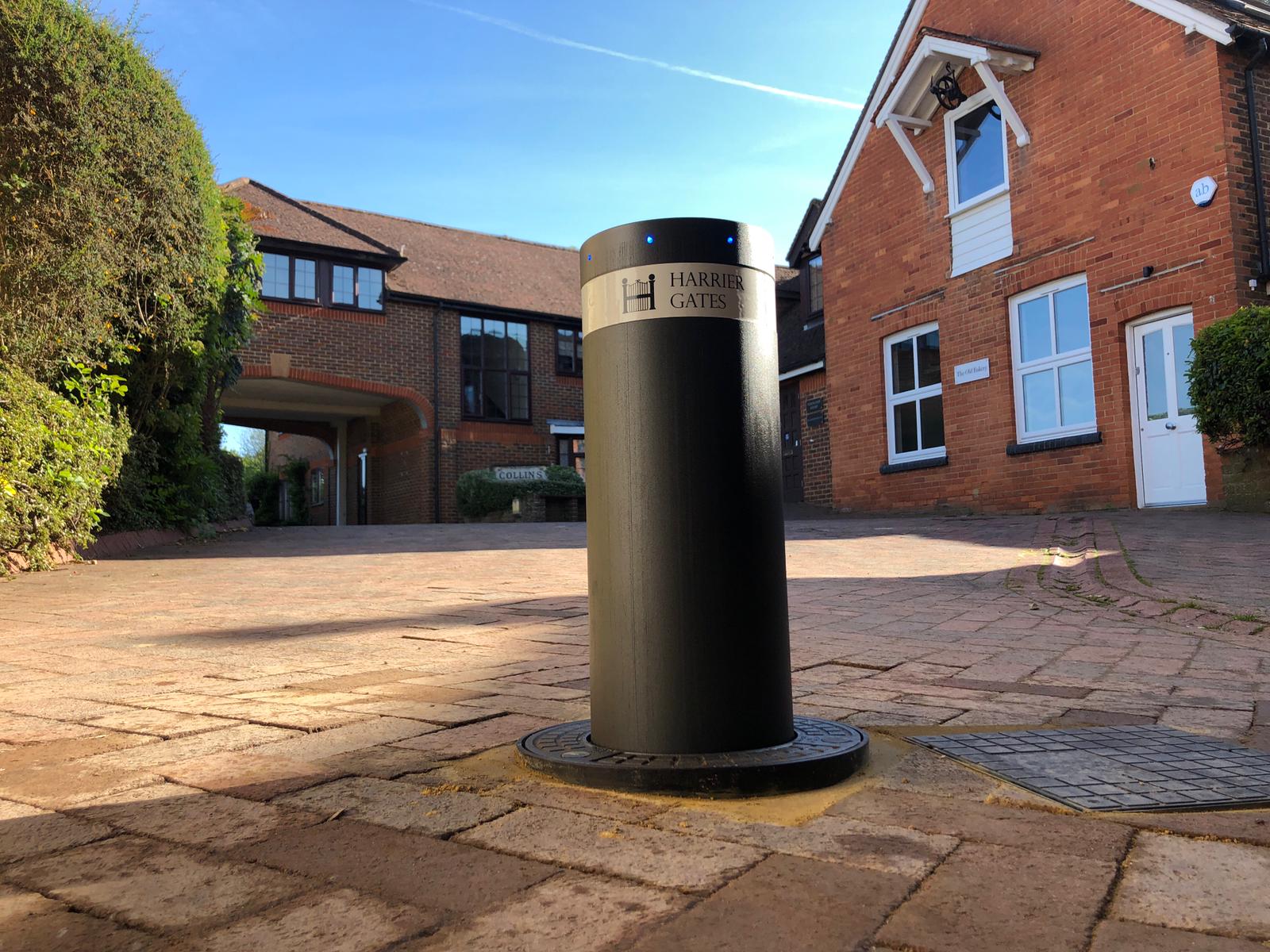
Automated and rising bollards are a great security feature for a home or business. However, because of how they function, there is considerably more work involved than with static posts.
- Excavation: You’ll need to have the ground underneath checked for gas, water and electricity lines.
- Integration: Rising bollards are often linked to access control systems like keypads, fobs and intercoms. This means they need to be connected so the systems communicate with each other.
It is also worth considering how your bollards are spaced. Whilst this is not a planning requirement, you should aim to ensure they are no more than 1.2 metres apart. This will stop a vehicle slipping between them.
How professional installation ensures compliance
Getting your bollards installed correctly helps to protect your home and gives you a little extra peace of mind. A professional installer like Harrier Gates will confirm the correct positioning for your bollards and ensure they are safe, secure and keep pedestrian routes clear while reducing vehicle access.
At Harrier Gates, we install barriers and bollards for homes and businesses across Surrey, West Sussex and Hampshire. We are Gate Safe approved, members of the SafeContractor scheme and have more than 25 years of shared team experience. We’ll handle the site survey and groundwork for you and ensure quality workmanship throughout. If you’d like to know more about barriers and bollards, get in touch today.
Planning permission for driveway bollards FAQs
Do you need planning permission for bollards on your own driveway?
In most cases, no. Not if you own the freehold and the bollards sit within your boundary. They are generally classed as a permitted development.
Do I need permission to put bollards on a grass verge outside my house?
Yes. In practically all cases you will need permission as verges are normally council-owned.
Does a leaseholder need planning permission for driveway bollards?
You won’t need to get planning permission, but you will need written consent from the freeholder, landlord or managing agent.
How much does planning permission cost if I do need it?
Where an application is required, the fee for works within your boundary, such as gates and enclosures, is £272 as of April 2026. Fees may change, so always confirm the current figures with your local council.