How to Secure Your Home for Year-Round Safety
Aside from our family, our home is perhaps our most valuable asset, and protecting it is likely to be one of our many priorities. Knowing how to secure your home is important. According to a Sainsbury’s Bank survey, 57% of Brits are concerned about home security, and 17% expressed significant worry.
So, what can we do to make sure our home remains safe and secure all year round? Below are just a few examples, and in this blog, we dive a little deeper to see how you can enhance your home security with a few simple changes.
- Consider smart cameras and lighting
- Add security lights to gardens and driveways
- Increase gate and fence security
- Safely store spare keys
- Keep valuables away from windows
- Secure any outdoor buildings
- Consider barriers and bollards to keep your car secure
- Add visible alarms to the property
Securing your home: Start at the boundary
The first part of your home that a criminal encounters is the garden or driveway. If it appears easy to access, has no visible security deterrents and seems to have items that may be attractive to a thief, they will almost certainly be keen to take their chances.
That’s why effective home security must start before an intruder gets close to the front or back door. Working in a layered approach delivers the best results. By working from the outside in, you have everything double-checked, secure and hopefully, acting as a deterrent.
- Perimeter security: gates, fences, bollards and access control systems that stop or slow an intruder before they get close to the property.
- Electronic security: alarms, cameras and smart devices that detect, deter and record.
- Everyday habits: Quick and easy routines that make your home a harder target for criminals.
Many guides will tell you to invest in cameras and alarms from the outset, and equipping the home with these items remains essential; however, making the property look difficult to enter and hard to leave hits the criminal in their decision phase, the one where they are deciding whether to go ahead. Making a property look accessible, but arming it with cameras, may mean you capture evidence, but your home may still be compromised.
Gate access control and perimeter security
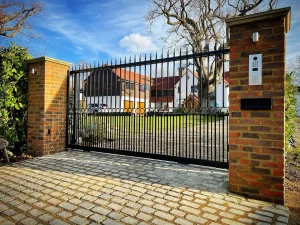
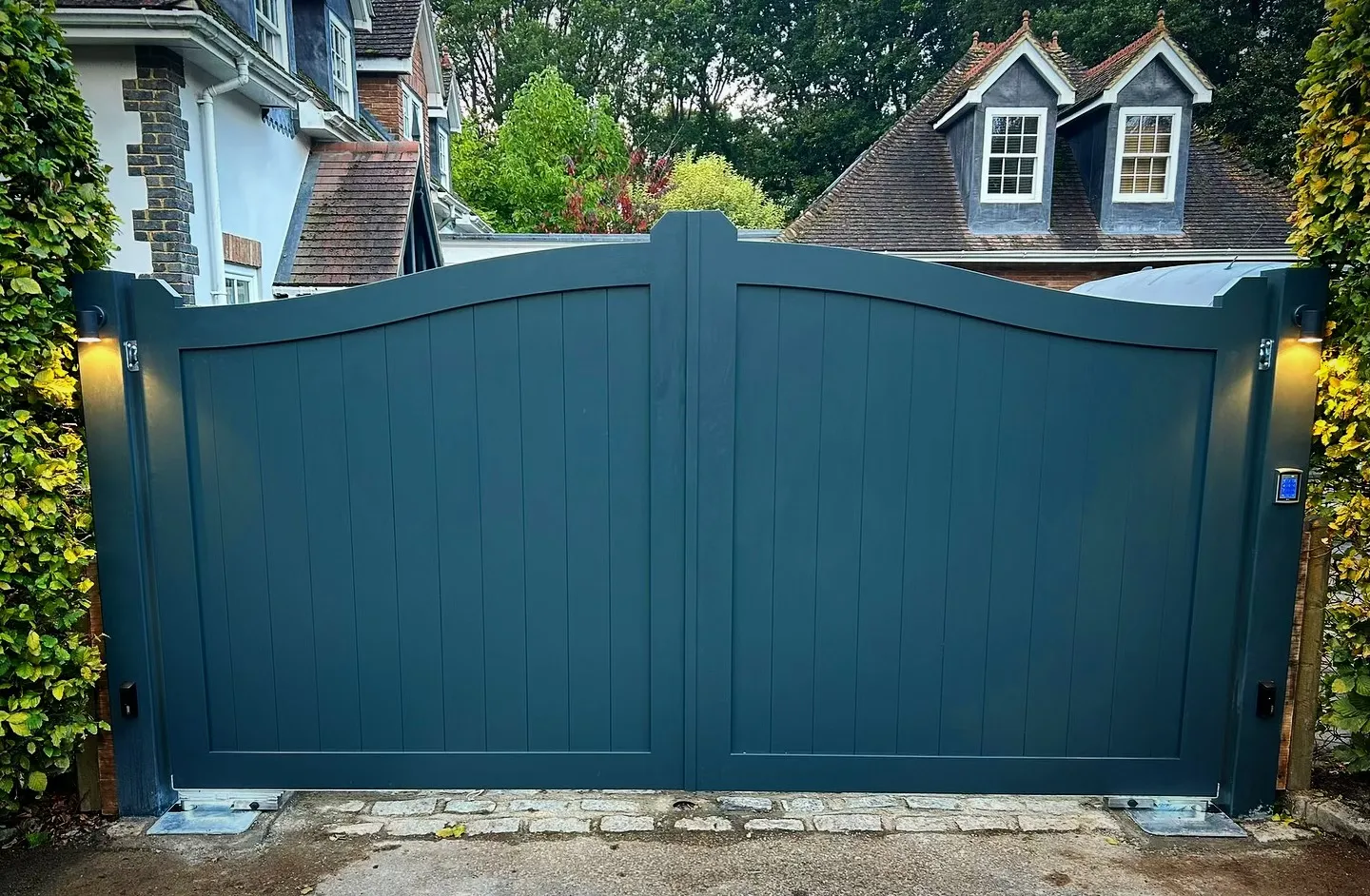
An electric gate that incorporates an access control system, such as a fob, keypad, or intercom, instantly signals to a criminal that the gate won't open simply by being pushed or pulled.
Security gates and the law you need to know
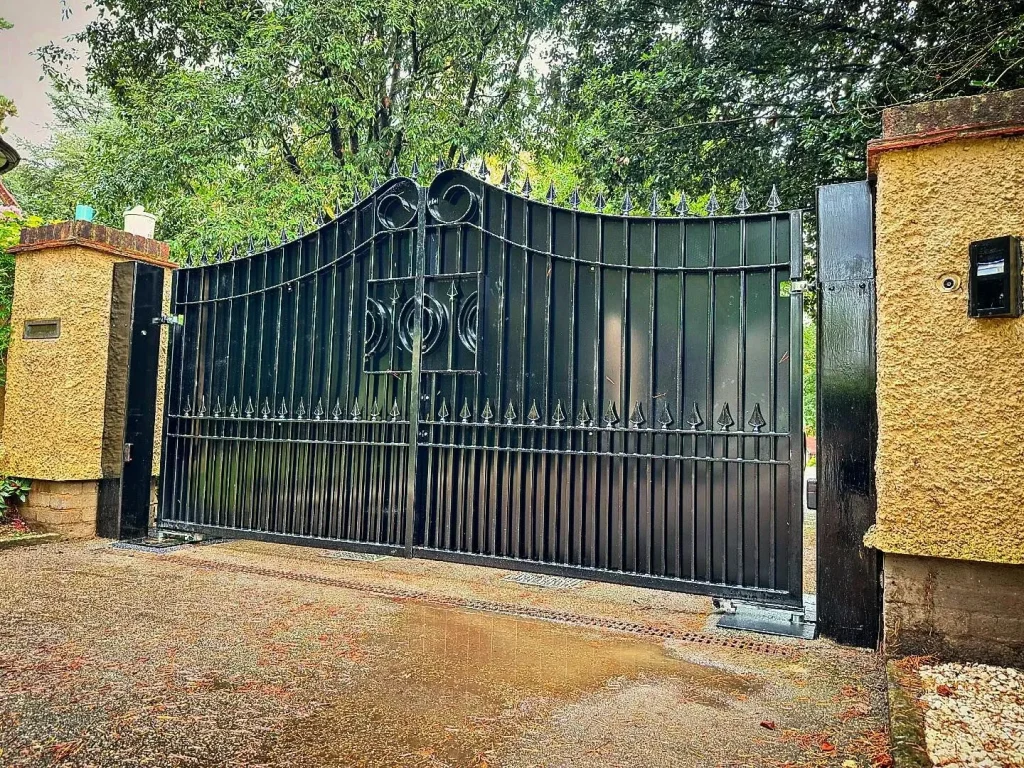
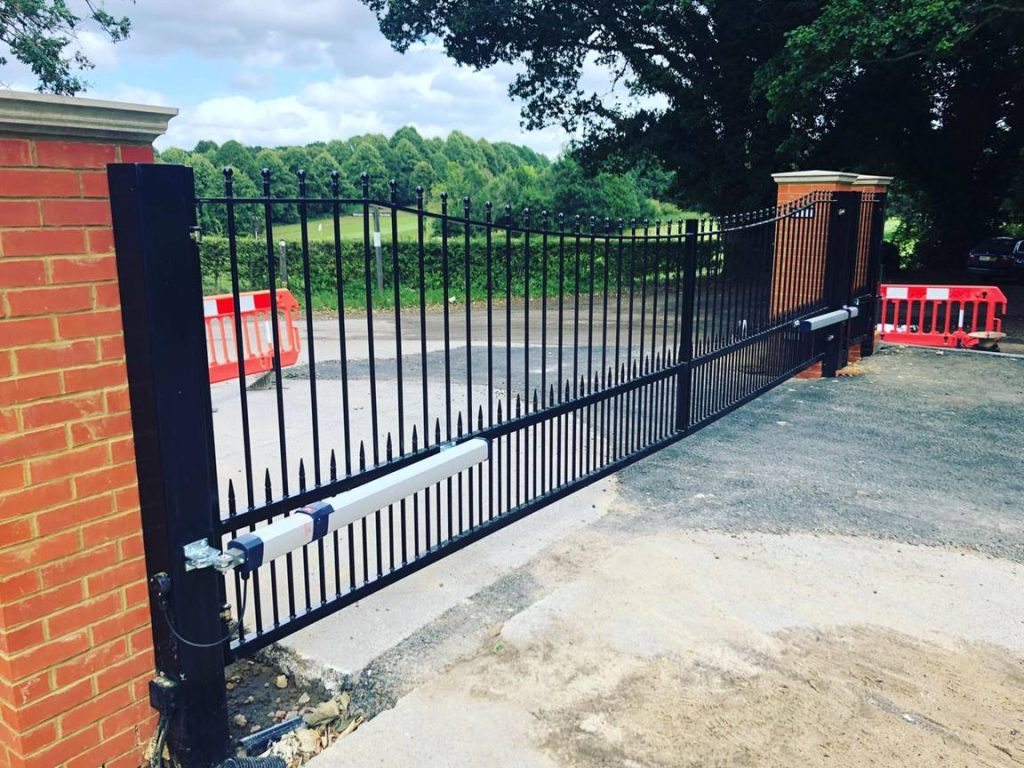
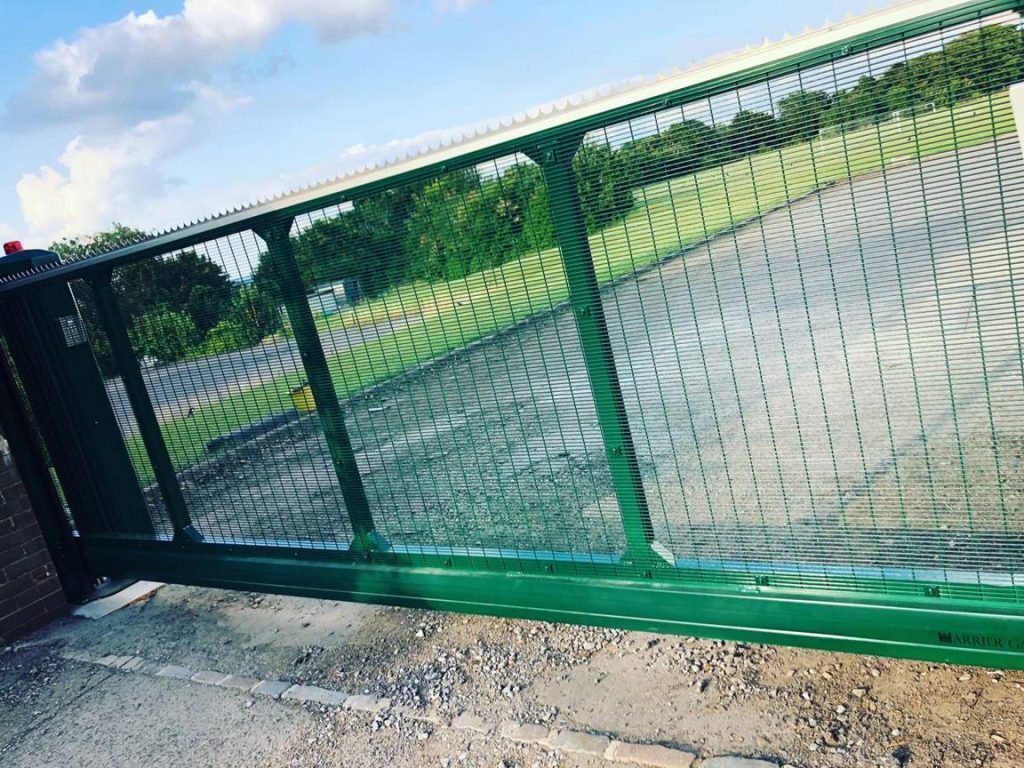
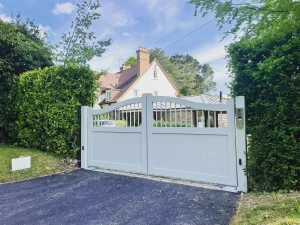
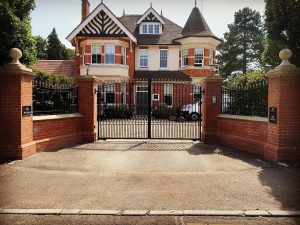
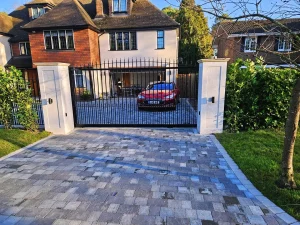
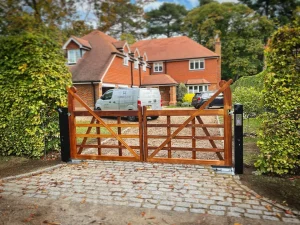
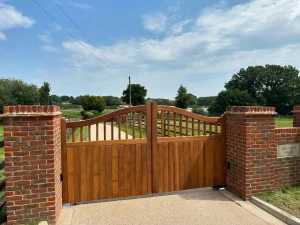
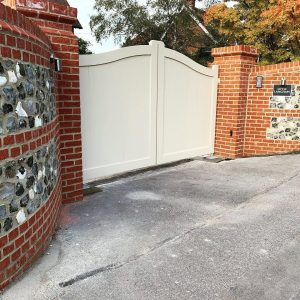
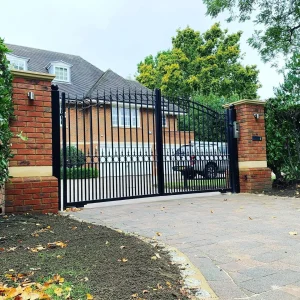
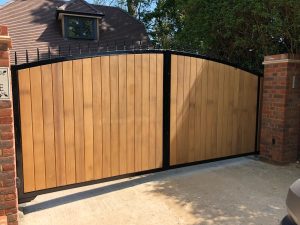
A professionally installed gate, whether it’s manual or automatic, adds a further line of defence to the property. Available in wood or metal and as swinging or sliding, they can enhance home security and visual appeal.
If you choose an automated gate, you should use a qualified Gate Safe installer. They are legally responsible, under the Supply of Machinery (Safety) Regulations 2008, for:
- Carrying out a documented risk assessment
- Fitting safety devices such as photocells and safety edges to prevent crushing or trapping
- Force testing the gate to BS EN 12453 and BS EN 12445, ensuring the gate reverses before its closing force exceeds 400N
- Producing a technical file and issuing a Declaration of Conformity
Annual force testing isn’t a legal requirement, but it is strongly recommended.
Access control systems
Access control allows you to manage entry without handing out any keys. Common options include:
- Keypads: Entry by PIN and quick to change if the code is ever compromised.
- Video intercoms: Callers can be seen and heard before being let in via your phone or a handset.
- Fobs and smart entry: Entry by tapping a programmed fob or scanning biometrics limits who can get in and out.
For most homes, an automatic gate, linked with a video intercom, can be a great way to upgrade existing home security systems and deter criminals before they get too close.
Bollards and barriers for driveways and vehicles
Vehicle theft is one of the most common crimes in the UK. ONS data shows that in 2025, it was estimated that there were around 596,000 vehicle-related thefts. With keyless cars becoming the norm, discreet theft, where the criminal uses a relay to amplify the key signal from indoors, is frequent. Adding physical barriers to driveways remains a reliable deterrent, as even though the thief can start the car, they might not be able to travel too far. Consider:
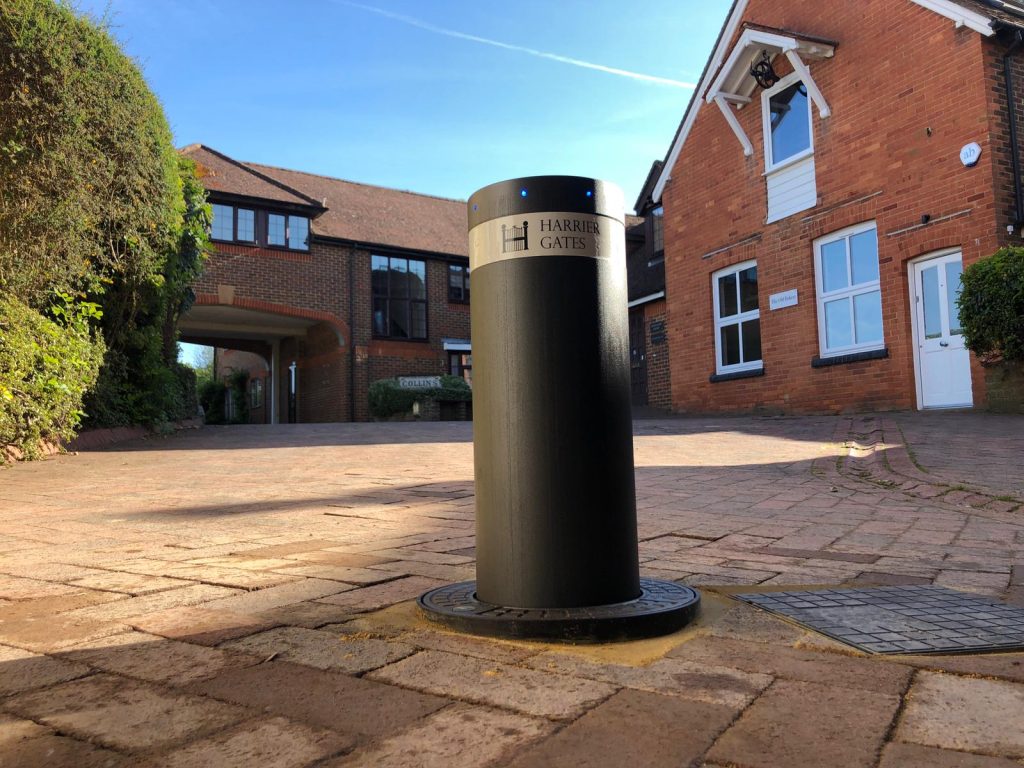
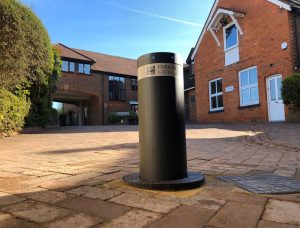
- Retractable or removable bollards to block a driveway
- Drop-arm or rising barriers for longer or shared driveways
- A locked gate across the drive when the vehicle is left overnight
Fences and walls
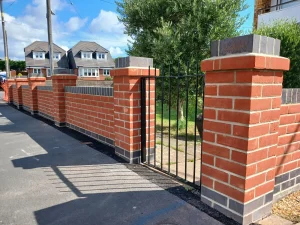
Fences and walls not only add to the aesthetic of your garden but also act as a robust security measure. In England, you can usually build or replace a fence, wall or gate under permitted development rights, as long as they follow the limits.
| Location | Maximum height without planning permission |
| Adjacent to a highway used by its vehicles (or a footpath) | 1 metre |
| Anywhere else (e.g., rear and side boundaries) | 2 metres |
These limits come from the Town and Country Planning (General Permitted Development) Order 2015 (Class A). Height is measured from natural ground level, and toppers, such as trellis, count towards the total. Listed buildings have different rules and areas covered by an Article 4 direction; you should always check with your local planning authority if either affects you.
Sheds, outbuildings and gardens
Spaces around your house shouldn’t be overlooked; sheds and garages can be home to valuable items that criminals may want to steal, or use to help them get into your home. Keep tools, ladders and valuables out of sight and locked away. Consider securing bikes to a ground anchor bolted to the floor or wall. Don’t forget side gates either; an unlocked side gate provides easy access.
Alarms, cameras and smart home security
With the perimeter handled, it’s time to look at the electronic measures that could help keep your home safe.
Alarms and monitoring
Alarms range from basic bell systems to professionally monitored systems that alert an alarm receiving centre. In the UK, alarms are currently rated against the BS EN 50131 standard by grade.
| Grade | Typical Use |
| Grade 1 | Low-risk homes |
| Grade 2 | Most standard homes |
| Grade 3 | Higher-value or higher-risk homes |
| Grade 4 | Maximum protection |
Most homes throughout Sussex and Surrey are well protected by a Grade 2 or Grade 3 alarm, although some might utilise the protection offered by Grade 4 alarms. A professionally installed and monitored alarm can also help you keep your home insurance costs down, but this is worth checking with your insurer, as policy terms vary by provider.
Choosing a security camera
When thinking about a CCTV system, you want your camera to capture as much detail as possible. Consider resolution of 1080p or higher, but also look for:
- Field of view
- Whether they are suited for outdoor use
- The night vision capabilities
- How footage is stored (locally or cloud)
Make sure any cameras are not obscured and cover entry points, the driveway and any blind spots around the boundary.
Smart home technology
Smart home technology such as cameras, doorbells, locks and lightbulbs, all provide an added degree of security and reassurance. However, the network that supports them can often be vulnerable without adequate care. Consider these tips to bolster your wi-fi security so your smart tech is not compromised.
- Change the default password on every device
- Secure your Wi-Fi with a unique password and WPA2 or WPA3 encryption
- Keep all device firmware up to date
- Enable two-factor authentication wherever you can
The law on CCTV and doorbell cameras
When adding CCTV or doorbell cameras to your home, you must be aware of the laws on recording. Whilst a great security feature, you could find yourself being prosecuted if you don’t follow the laws.
If a home camera or doorbell records within your boundary, it falls under the “household exemption”, and data protection laws do not apply. However, the moment it captures a neighbour's home, a shared space, or even the public pavement, you become a data controller under UK GDPR and Data Protection Act 2018.
This means you will need to:
- Display a sign
- Capture no more than you need
- Store footage securely
- Delete it regularly
- Respond if someone asks for footage in which they appear
Audio is seen as far more intrusive and is best switched off unless necessary. A legal case (Fairhurst v Woodard) in 2021 found that a homeowner’s camera breached data protection laws and amounted to harassment, with damages and costs reported at around £100,000.
Everyday habits to keep your home secure
The cheapest security measures are the ones that cost nothing. Make simple things routine. Lock all doors and windows, even if only going out for a short while. Keep keys away from letterboxes and ensure any locks on external doors are BS 3621 approved. Not only will they bolster security, but they are also a common insurance requirement.
When you go on holiday or away for extended periods, remember:
- To use timers on lights and a radio so the home looks and sounds occupied
- To ask a trusted neighbour to keep an eye on your home and park on your drive
- Cancel newspapers and milk deliveries so items don’t pile up at the door
- To keep social media posts about holiday plans to a minimum, or better yet, don’t post anything until you are home
How much does home security cost in the UK?
Costs for home security will vary widely depending on the type of system, the size of the home and whether you add live monitoring. Below are some indicative prices, but you should always get a quote before settling on a security system to ensure you get the best for your budget.
| System type | Typical installed cost | Monitoring |
| Bell alarm | £300-£600 | Usually none |
| Wireless alarm | £500-£1,200 | £15-£40 per month |
| Wired alarm | £800-£1,800 | £20-£50 per month |
| Smart alarm system | £1,000-£2,500+ | £25-£60 per month |
| High-security integrated system | £1,500-£3,500+ | £30-£80 per month |
DIY kits offer a cheaper alternative, but these are not tailored to your home. A professional installation is designed around your property and is more likely to satisfy insurers. For anything powered, such as an automated gate, it is a legal requirement rather than an option.
Looking to secure your home in Sussex and Surrey?
If you want to enhance home security, the team at Harrier Gates can help. We design, build and install bespoke electric gates and can add security features such as access control systems, barriers and bollards and external lighting to your home. With extensive industry experience and industry accreditations such as SafeContractor and Gate Safe, we are a trusted name in home improvement and security. Contact our team today to book a free survey and see how you can protect your property.
How to secure your home FAQs
Do I need planning permission for a security gate or fence?
You won’t normally need planning permission for fences, walls or gates as long as they do not exceed 2 metres in height, or 1 metre if adjacent to a highway. Listed building and Article 4 are exceptions, so check with your local planning authority.
Is it legal to have a doorbell camera that films the street?
Yes, but once it records beyond your boundary, you are bound by data protection rules. This would mean you need to display a sign, limit what you capture, store footage securely and delete it regularly.
Are home security systems expensive?
They can be. The final cost will be determined by the size of your property, the features you add and whether you have it professionally installed. You could expect to spend £800 to £2,500, with larger homes costing much more. Don’t forget to add monitoring costs, these are a monthly expense and could range from £15 to £80 or more.