How to Choose the Right Vehicle Access Control System for Your Business
Security is a key consideration for business owners, and implementing vehicle access control systems can be a wise decision. Controlling who and what drives onto your site may at times seem a drastic decision, but it can save you money, improve employee safety and help protect your assets.
Whether it's a commercial premises, a car park, a warehouse or an industrial unit, this added level of control can make a huge difference.
In this blog, we explore all the options for business owners and facilities managers considering a security upgrade, covering system types, legislation and more, so you can make the best decision for your premises.
What are vehicle access control systems?
Controlled vehicle access systems are barriers or gates installed at the entry and exit points of a premises to control who enters and exits. They can be manual or automatic systems and be integrated with digital access technology such as RFID, keypads, intercoms and CCTV.
They are often used in:
- Commercial car parks and retail sites
- Industrial estates and warehouses
- Office parks and business centres
- Schools, hospitals and public sector sites
- Private residential developments
By allowing access only to those authorised to be there, control remains in the hands of the business owner or site manager. When managed correctly, this can enhance the overall experience for staff, customers, and visitors as safety concerns are reduced.
What are the different types of vehicle access control systems?
There is a range of options to consider when implementing a vehicle access control system. Much will depend on the type of space you are granting access to, its size, your budget and the level of security you deem suitable.
| System Type | Best For | Key Feature |
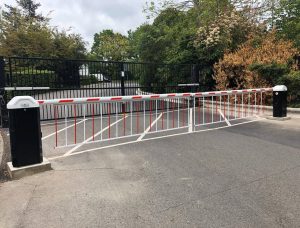
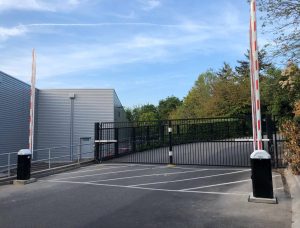
| Automatic rising arm barrier | High-traffic car parks and commercial entrances | Fast operation. Compact |
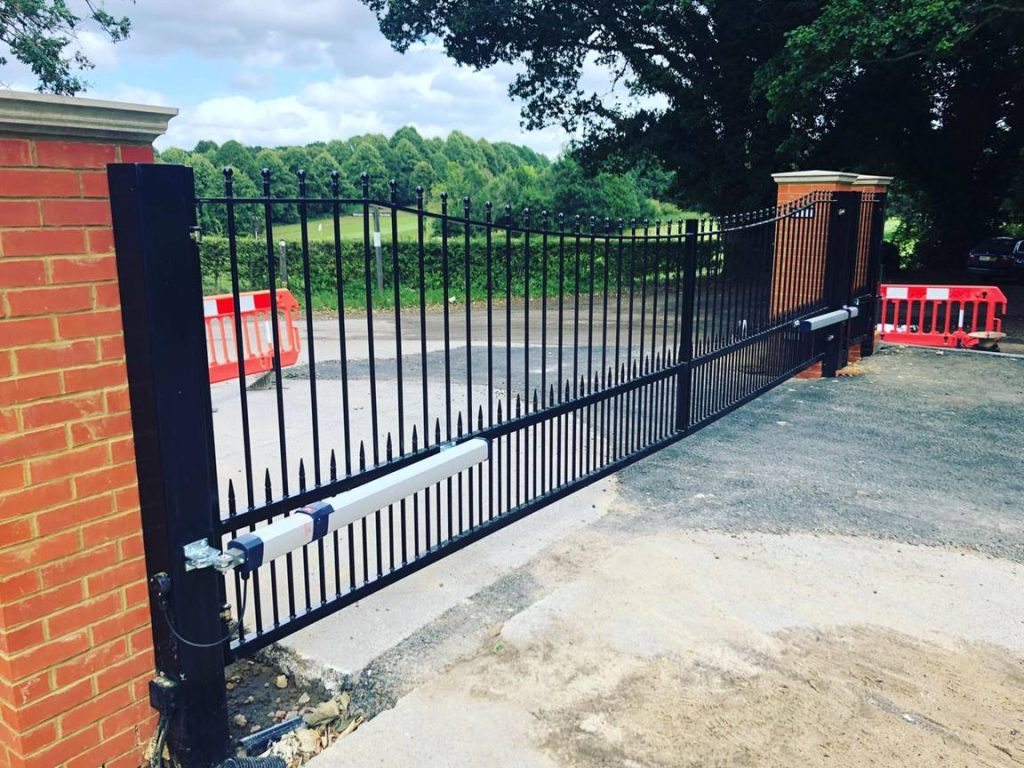
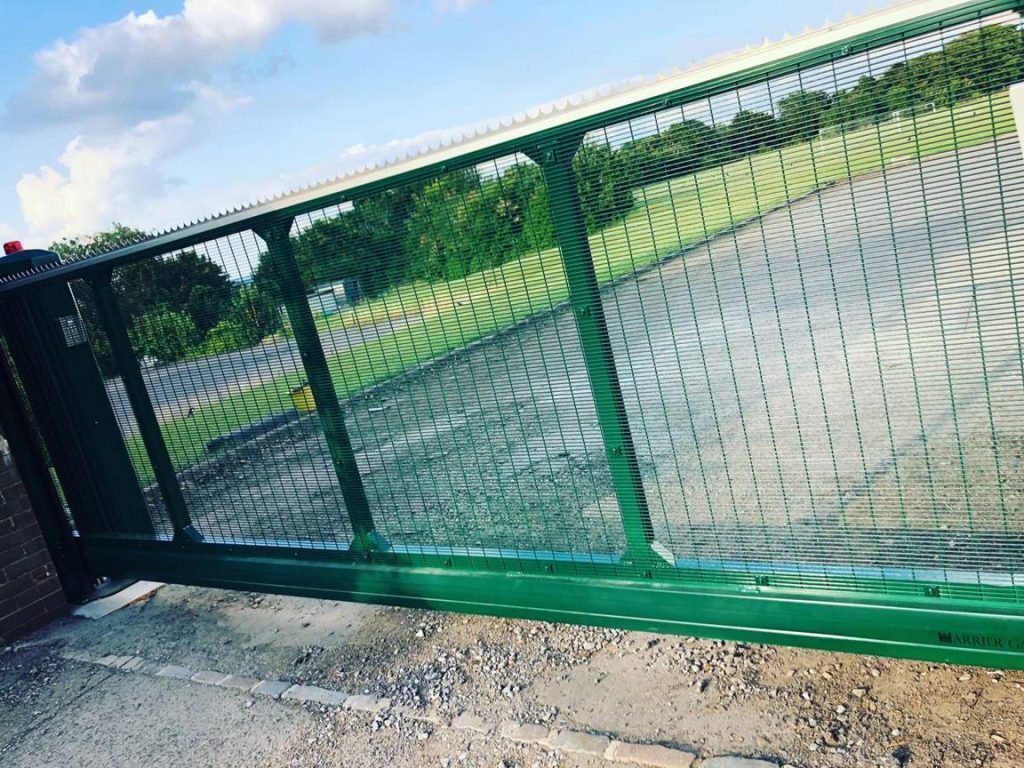
| Electric sliding gates | Industrial and large commercial sites | Handles wide openings and heavy vehicles |
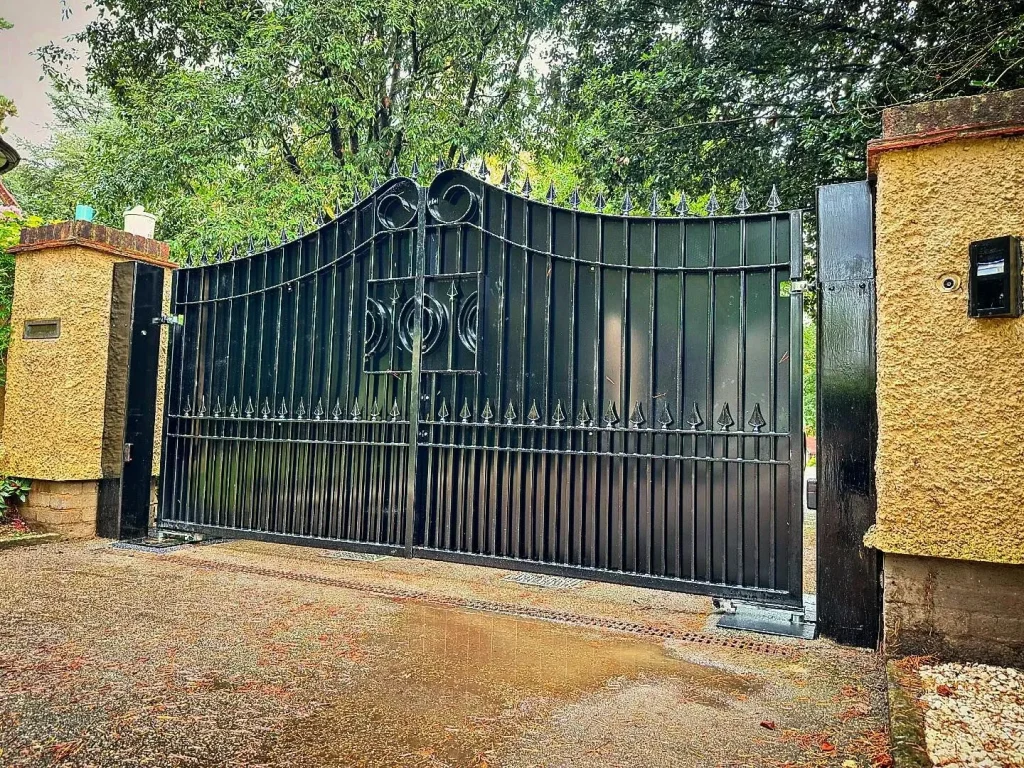
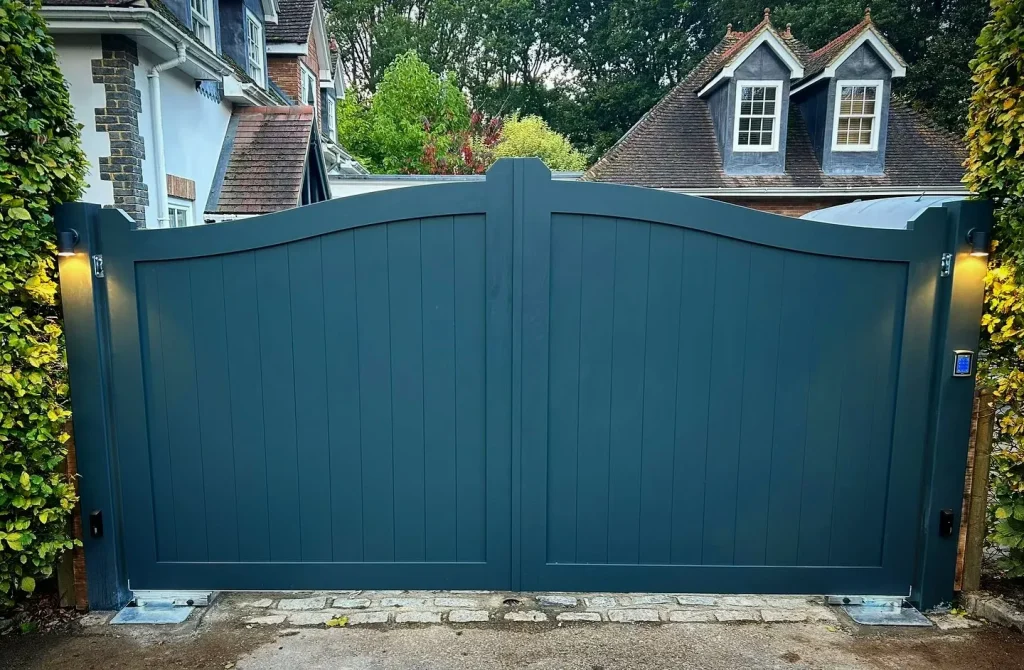
| Automatic swing gates | Lower-traffic entrances with space | Traditional aesthetic, robust build |
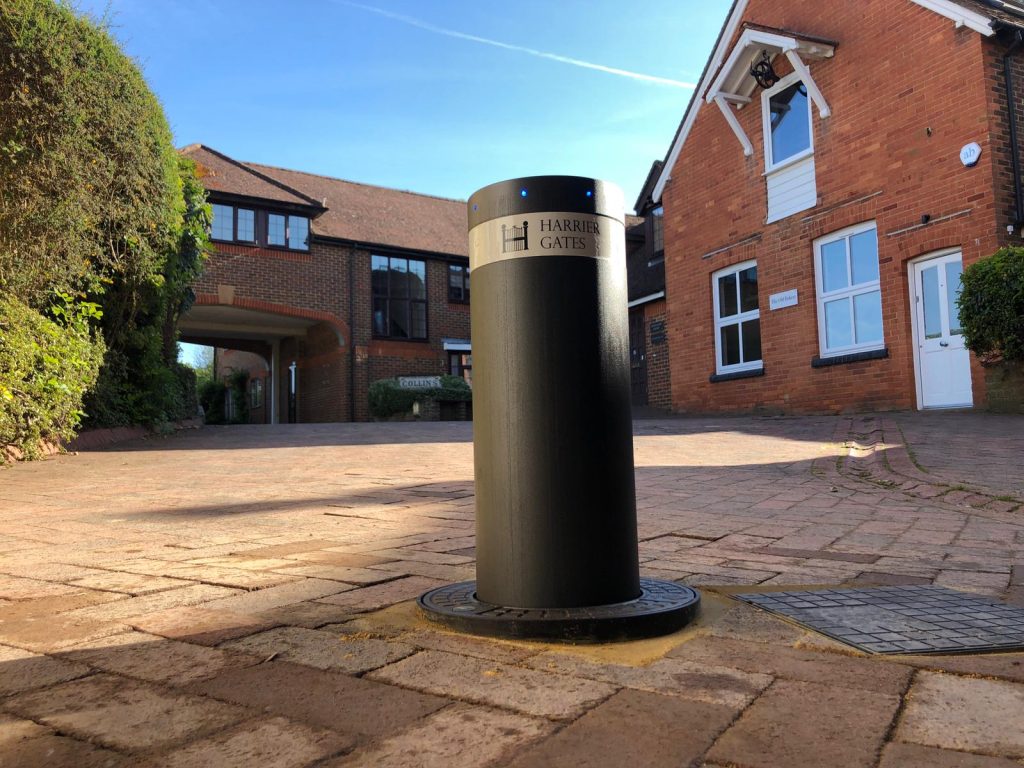
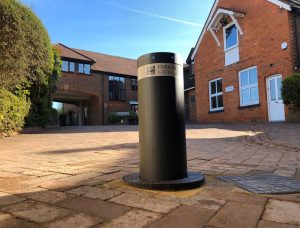
| Rising bollards | High-security or pedestrian shared zones | Discreet, can withstand vehicle impact |
| Height restriction barriers | Car parks and loading bays | Prevents HGVs or oversized vehicles from entering |
Automatic rising arm barriers
Among the most common forms of vehicle access control, these barriers have a motorised arm that lifts and lowers to admit or restrict vehicles. They can be triggered by RFID cards, ANPR, keypads or remote controls. They can be found in places like car parks where high volumes of traffic are common and quick throughput is essential.
Electric swing and sliding gates
Gates can deter intruders and are a popular choice for commercial and industrial sites. Sliding gates run along a track and are often preferred when there is a wide opening or if space prevents a gate from swinging inwards or outwards.
Swing gates can be a good option when there is low-level traffic, and aesthetics may often be a key feature. This sees them often preferred for private residential developments or office environments.
Rising bollards and automatic driveway bollards
Rising bollards are an increasingly popular option for premises that need both vehicle control and pedestrian access. They retract, flush with the ground, allowing authorised vehicles to pass, before rising again to secure the entrance. For businesses looking for a discreet yet effective deterrent, automatic driveway bollards offer a finish that won’t compromise security.
Height restriction barriers
These fixed-height bars are often seen at car park entrances or areas where specific rules over vehicle size may apply. They physically prevent vehicles that exceed the height limit from entering, protecting infrastructure and pedestrians from larger vehicles that shouldn’t be on site.
What to consider before installing a vehicle access control system
Before settling on an access system for vehicles, it’s worth considering the purpose of having one and how it may affect your premises. Implementing the wrong vehicle access controls for your business or development could cause traffic backlogs, provide access issues or be an expense you could have avoided. Before settling on a particular system, consider the following:
Site traffic
Look at how many vehicles enter and exit your site per hour at busy times. Do you need something that works fast, or can a slower, more controlled entry work? A supermarket, for example, will have vastly different requirements from an office car park.
By mapping the flow of traffic before choosing a system, you can prevent bottlenecks at the entry point and ensure your system aligns with the needs of your premises.
Access methods
You’ll have to think about how people gain access. From security to visitor frequency, each plays a part in determining which access method works best for you. Among the most common options are:
- RFID cards or fobs: Issued to staff or regular visitors
- Keypads and PIN entry: Simple and cost-effective, often used for lower security sites
- ANPR (Automatic Number Plate Recognition): Ideal for higher traffic sites or those that are unmanned
- Intercoms and video entry: Allow for remote verification before granting access
- Smartphone apps: Flexible, managed access
Layout and space
Some systems require more physical space than others. A sliding gate, for example, needs a track along the entrance for it to run along. A swing gate needs plenty of space in front of or behind it. Rising bollards require groundwork, and intercoms may require work carried out in multiple areas.
Having a survey conducted by a qualified and experienced installer will help find the ideal solution for your needs.
Integration with existing systems
Many modern vehicle access control systems are part of a wider security system. CCTV, alarms or building access control systems can all be incorporated with vehicle barriers. However, not all systems can combine, so look for systems that support full integration to avoid fragmented security management.
Power and backup
Automatic systems rely on power. This means you’ll have to see how to incorporate this system into your existing infrastructure and whether backup systems are necessary in the event of a power cut or failure.
How to ensure any vehicle access system installation is safe and compliant
Failing to understand the importance of having a compliant system installed is often overlooked until problems hit business owners head-on.
Vehicle barriers and automated gates are classified as machinery under the Supply of Machinery (Safety) Regulations 2008. This means they must meet specific safety standards before and after installation.
Key compliance points include:
- Gates and barriers must comply with BS EN 13241:2003+A2:2016 (the product standard for commercial and industrial doors and gates) and BS EN 12453:2017 (which sets out safety requirements and force limitations for powered operation)
- Installations must carry a CE or UKCA mark confirming conformity with UK safety requirements
- A risk assessment must be completed before installation, identifying and mitigating hazards such as crushing, shearing and entrapment
- Safety devices such as pressure-sensitive edges, photocells and warning lights must be installed and tested
Failure to comply can result in prosecution in the event of an accident. The HSE (Health and Safety Executive) has specifically identified poorly installed or inadequately maintained automated gates as a significant workplace risk. High-profile cases have seen businesses fined substantial sums for failing to comply. In a case brought by Kent Trading Standards, a fencing company and subcontractor were fined £30,000 and £3,600 respectively, after an automated sliding gate weighing over 400kg came free of its housing and caused life-changing injuries to a homeowner. This was a prosecution brought under the same Supply of Machinery (Safety) Regulations 2008 that apply to commercial installations.
Working with a fully accredited and experienced installer can help you avoid such issues and give you full confidence that risk assessments, maintenance schedules, conformity documentation and more will all be provided.
Looking after vehicle access systems after installation
Something often forgotten by business owners is that legal obligations continue after installation, too. These systems can complete hundreds of movements per day, and as a result, require regular maintenance. PPM, or planned preventative maintenance, is a legal obligation under PUWER (Provision and Use of Work Equipment Regulations 1998). This means that work equipment, including gates and barriers, is maintained in a safe condition.
Many installers offer specially tailored maintenance packages that include:
- Regular inspections and lubrication of mechanical parts
- Testing of safety devices
- Updates for integrated access controls
- Emergency call-out cover
Do I need a vehicle access control system?
Reading this far, you might still be unsure as to whether implementing a vehicle access system is necessary. A simple way to determine whether it is likely to be a good return on investment is by looking at the examples below. If your business experiences any of them, it may be worth considering a way to control access.
- Unauthorised vehicles parking on site
- Security incidents involving vehicle access
- Difficulty managing visitor or contractor parking
- Liability concerns around vehicle movements near pedestrians
- A need to restrict certain areas to limited personnel
The operational and security benefits, such as reduced theft and vandalism, improved traffic flow and enhanced staff safety, almost always outweigh any installation and maintenance costs.
When choosing whether to have a vehicle access control system added to your premises, speak to Harrier Gates. We specialise in the design, installation, repair and maintenance of systems for your business. Covering Surrey, West Sussex and the surrounding areas, our team provides specially tailored solutions for your home or business. A Gate Safe approved installer with more than 25 years of experience, we work with trusted manufacturers including CAME, Paxton, BFT and more. Whether it be a bollard system, a swing gate or a rising barrier, our team can help.
Contact us today to learn more about your options.